
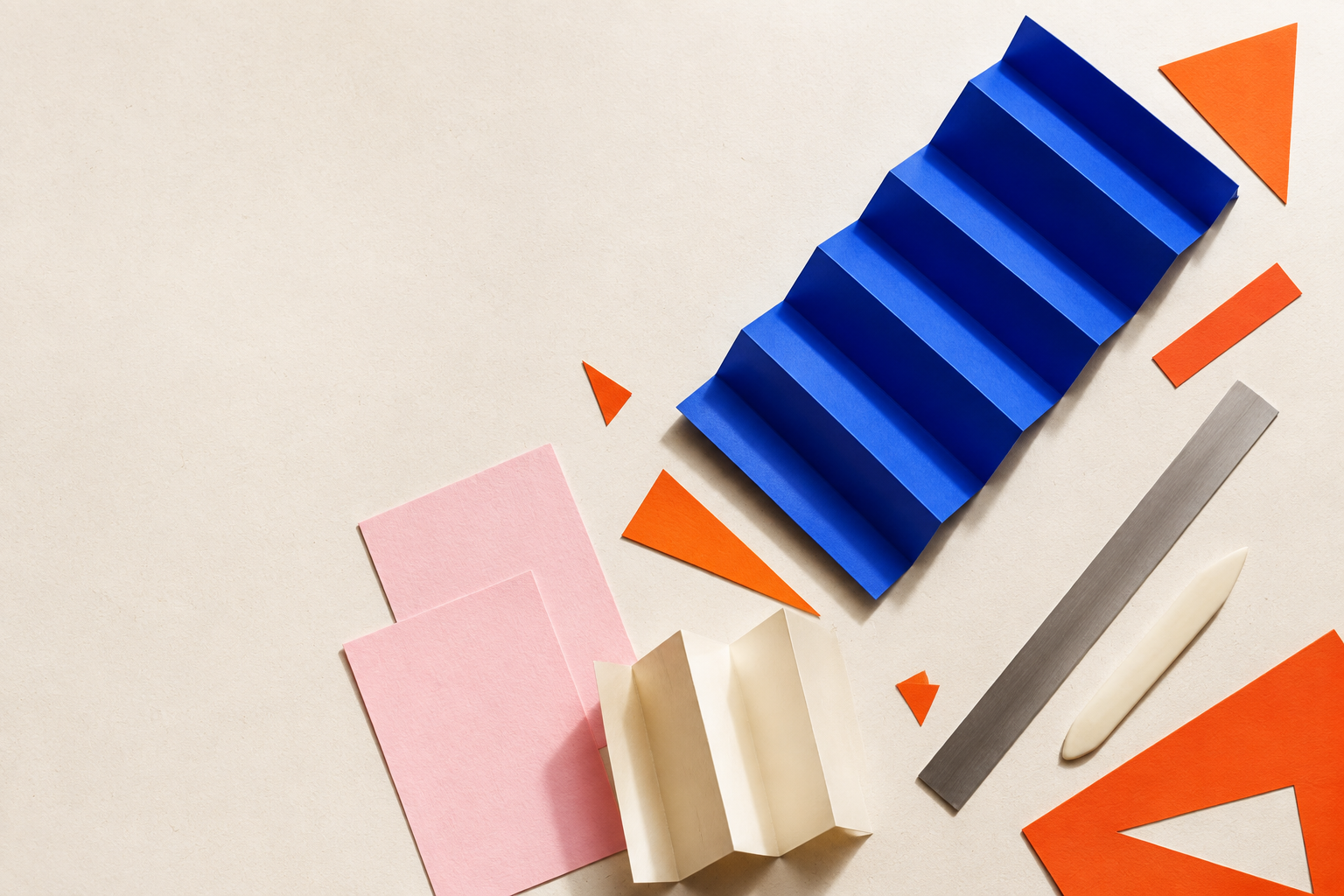
Before an idea becomes an object, it becomes a question you can hold.
A sheet of paper is a generous beginning. It is familiar enough to feel unprecious, but change one edge and the whole thing behaves differently. A crease makes a hinge. A second makes a wall. Suddenly, something that lay flat can stand.
This is why the first exercise at Fold starts without a drawing. Take a sheet, fold it once, and put it on the table. What does it want to do? Lean? Open? Fall? The answer is already useful.
Let the material answer.
Instead of asking a prototype to look finished, ask it to reveal one thing. Can a fold hold a little weight? Can a cut redirect the light? Can two identical pieces make a shape neither makes alone?
Change one variable and keep the earlier version beside it. You are not building a collection of mistakes. You are making your thinking visible.
“Make something
that tells you
what to try next.”